
Why does boat brokerage come in a giant cardboard box ?
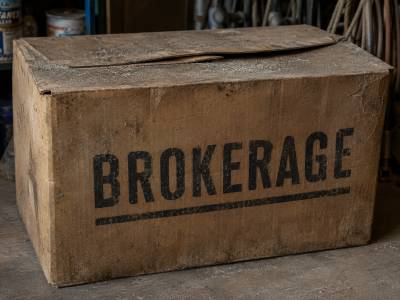
I sometimes wonder what would happen if you walked into your local chandlery and asked for a broker.
The assistant disappears into the stockroom, there's a loud crash, a bit of swearing and then he or she reappears dragging an enormous cardboard box across the floor with one word printed on the side: BROKERAGE.
"I only want to sell my boat," you say. "It's all in there," comes the reply.
You lift the lid and inside there's a camera, a valuation guide, advertising, legal paperwork, survey coordination, negotiation, payment handling, registration documents, sea trials, a kettle, a large bottle labelled ‘patience’ and, tucked away in one corner, a handwritten note ‘whatever you do, don't reply to that email until tomorrow morning’.
It sounds ridiculous, except that's more or less what brokerage has always been.
More than one job
We've treated it as one product when, in reality, it's a collection of completely different jobs bundled together because that was the easiest way to sell them.
The interesting thing is that technology hasn't replaced a brokerage, it's started unpacking the box.
Twenty years ago, you probably needed a broker to find a buyer. Today you might find one through Facebook, YouTube, a marina noticeboard or a WhatsApp group.
That doesn't mean the rest of the box suddenly becomes worthless. In fact, some of it becomes even more valuable.
Guidance
One of the services we used to joke about internally was ‘marine marriage guidance’.
After enough years around boat sales, you realise people rarely argue about boats; they argue about what the boat represents. A buyer says, "The upholstery's a bit dated" and the owner hears, "Everything you've spent the last 10 years looking after is rubbish."
A surveyor finds a few defects, exactly as surveyors are paid to do. The buyer sees negotiation; the seller sees a personal insult.
I've seen transactions where tempers got so out of hand that both the buyer and the surveyor ended up in the water. And I've seen another, where everything was going perfectly, until the buyer explained, quite calmly, that the money was coming from the Lord.
Nobody teaches you how to deal with moments like that, but experience does. The paperwork is rarely the difficult part, people are.
Uncertainty
The longer I've spent around boat transactions, the more I've come to believe that good brokers aren't really selling boats at all - they're managing uncertainty.
Every successful transaction quietly poses a series of questions. Does the seller own the boat? Has the survey been completed? Are the documents correct and has the money arrived?
Each answer removes another layer of uncertainty until both parties have enough confidence to complete. That's the part many people don't see.
If you've already found your buyer, perhaps you don't need marketing. If you can take decent photographs, maybe you don't need a photographer.
But you may still need somebody who understands how to get from, "We've agreed a price," to, "Congratulations, she's yours."
Open the box
That, I suspect, is where the future lies. Not in replacing brokers or pretending technology solves
everything, but in recognising that the giant cardboard box can finally be opened.
Some people will still want the whole thing; others will only need one or two parts. Either way, the real product isn't the box, it's the confidence that comes from knowing someone has helped remove the uncertainty before it becomes a problem.
Perhaps that's what brokerage was really selling all along.
https://boatshedbusiness.com/
Credit:
This article was written by Neil Chapman for AAS October 2026
Comments 0
Please note this comments section is public. Please do not post your personal details here. Please read our commenting guidelines before posting.
Login or register for free